Software engineer · Creative technologistMaceió, Brazil · BRT
Vinícius
Romualdo
SOFTWARE ENGINEER

FINTECH · DISTRIBUTED SYSTEMS · RELIABILITY · ADAPTIVE SECURITY

Systems, decisions, impact.

I design the logic behind high-trust financial products—and turn distributed complexity into experiences people can rely on.

Follow the signal
Building fintech at iFood · Researching adaptive security at USP

00 / Operating principle

Reliability is a creative medium.

The best systems do not expose their complexity. They transform it into confidence: one clear state, one explainable decision, one experience that earns trust.

  1. 01Make complexity legible
  2. 02Design for failure before it arrives
  3. 03Turn constraints into leverage

modeDay ──▶ Instrument

Follow the signal.

entering the systems

01 / Selected systems

Engineering stories, told through decisions.

Three chapters across financial infrastructure, platform engineering and adaptive security. Each begins with tension and ends with a system that behaves more clearly.

Product narratives are intentionally generalized to respect confidentiality.
01Money in motionFintech · Distributed systems

Pix keys, without the uncertainty.

01 / Context

A payment key looks simple. Behind it live ownership, claims, asynchronous events and reconciliation across multiple boundaries.

02 / Decision

Model consistency as a visible journey—not as the illusion of one synchronous request.

03 / Architecture

Event-driven state transitions, idempotent consumers and reconciliation paths keep every participant aligned.

04 / Outcome

Clear states across an asynchronous journey, with failure designed as part of the product—not hidden beneath it.

GoKotlinCQRSPostgreSQLSQSKubernetes
1 of 3core platforms led end to end at iFood
01 / LIVE SYSTEM MAP
02Trust at scalePlatform engineering

Audit became a product capability.

01 / Context

Compliance data was essential, but every team solving it independently multiplied friction, gaps and maintenance cost.

02 / Decision

Create one reusable foundation that made the correct path the easiest path for product teams.

03 / Architecture

A normalized event contract, shared capture layer and observable pipeline separated policy from product code.

04 / Outcome

Shared traceability with lower adoption cost—and a platform capability that improved as more teams used it.

GoKafkaDDDObservability
02 / LIVE SYSTEM MAP
03Systems with instinctsResearch · Cybersecurity

What if software noticed danger first?

01 / Context

Microservices scale quickly. Their attack surface and operational uncertainty grow just as fast.

02 / Decision

Connect detection, prevention and recovery in one continuous adaptive feedback loop.

03 / Architecture

MAPE-K coordinates monitoring, analysis, planning and execution around a shared model of system knowledge.

04 / Outcome

A research direction toward software that can move from reacting to threats to anticipating them.

MAPE-KMicroservicesSecurityAI
03 / LIVE SYSTEM MAP

Featured field note

Spring Boot · Clean Architecture · Trade-offs  ·  Spring Boot · Clean Architecture · Trade-offs  ·  Spring Boot · Clean Architecture · Trade-offs

Is Clean Architecture always a good idea?

A practical argument about boundaries, abstractions and the moment architectural discipline becomes accidental complexity.

Read on Medium

02 / Current research

Can software develop instincts?

At USP, I research self-adaptive security for microservices: systems that can detect, prevent and recover from threats with increasing autonomy.

From software that reacts to software that anticipates.
Self-protectionSelf-healingMicroservice security
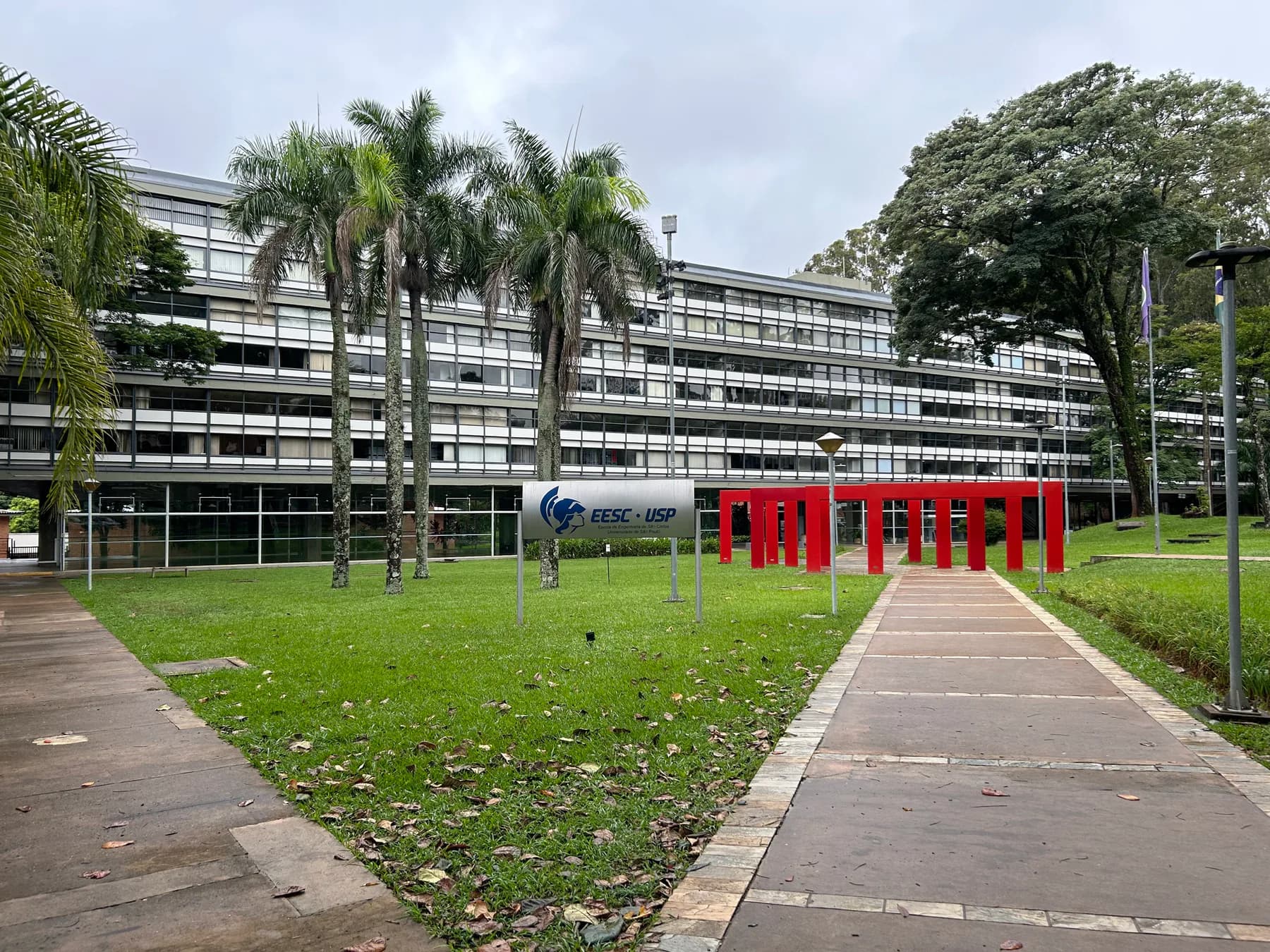
Entrance to the EESC–USP campus in São Carlos, where Vinícius develops his master's research
EESC–USP · São Carlos · Personal archive
MAPEKNOWLEDGE

modeInstrument ──▶ Day

Back to the person.

leaving the systems

03 / Trajectory

Code, consequence and curiosity.

Each chapter added a different kind of responsibility to the systems I build. Two spans are still open.

span
202120222023202420252026now2027
duration
UFSCarComputer Science
4 yr 4 mo

Algorithms, systems thinking and a durable appetite for difficult questions. Jan 2021 — Apr 2025

UFSCarScientific Researcher
1 yr 1 mo

Web architecture for mental-health and substance-use rehabilitation research — Next.js, TypeScript, CI/CD. Mar 2022 — Mar 2023

FAPESPScientific Researcher
1 yr 1 mo

The same rehabilitation platform under FAPESP funding: system architecture, best practices and CI/CD provisioning. Mar 2023 — Mar 2024

iFoodSoftware Engineer Intern
9 mo

Back-office for iFood Pago, the team's first shared library, and an AI-integrated backend built at the internal hackathon. Mar 2024 — Nov 2024

iFoodSoftware Engineer
1 yr 10 mo

Financial products, backend architecture and production reliability across Pix, transfers and banking journeys. Nov 2024 — present

team slo45.0 → 61.1infra cost−81%core platforms3, led end to end
USPM.Sc. Computer Science
1 yr 5 mo

Self-adaptive security for microservices and the question of how software can defend itself. Mar 2025 — present

Indent = nested inside the span above · overlap is concurrency, not sequenceDashed tail = projected to Mar 2027